

Anyone who wants to buy golf balls quickly faces a choice that looks simple, but has a real impact on performance. The ball is the only piece of equipment used on every shot: driver, irons, wedges and putter all strike the same ball. That is why the right golf ball influences not only distance from the tee, but also flight stability, spin, control around the green and feel when putting.
Many amateur golfers play whatever they find, switch between sale models or use the ball a friend recommends. That can work, but it often makes results less consistent. A better approach is to choose a ball that fits your swing speed, ball flight, short game and budget.
Player type |
Recommended ball |
Why it makes sense |
Beginner or high handicap |
Durable 2-piece or soft distance ball |
More forgiveness, lower side spin and a fair price when balls are lost. |
Occasional player |
All-round ball with a softer feel |
A balanced mix of distance, control and cost. |
Improving player |
Multi-layer performance ball |
More wedge spin and better feedback when putting. |
Fast swing speed |
Tour or performance ball with higher compression |
More stable flight and better energy transfer at higher speed. |
Short-game focused player |
Urethane cover and more greenside spin |
More stopping power on chips, pitches and bunker shots. |

A golf ball cannot fix a poor swing, but it can reward good shots more reliably and make bad shots less expensive. A ball with too much spin can exaggerate a slice or hook. A very firm ball can feel lifeless at slower swing speeds. A tour golf ball can be excellent around the green, but it is often expensive and not automatically longer for beginners.
The goal is not to find the best golf ball in general. The goal is to find the right golf ball for your game. When you use the same model over several rounds, you get more reliable feedback: how far does your 7-iron fly, how quickly does the ball stop on the green and how does a long putt feel? This repeatability matters more for scoring than a random premium ball in the bag.
Distance balls are usually built for lower driver spin and strong durability. They suit beginners, players who lose several balls per round and golfers who want strong value for money. The trade-off is that they often provide less control around the green than premium multi-layer balls.
A soft golf ball feels gentler at impact and gives many players more confidence. It often fits moderate or slower swing speeds. On putts and short chips, many golfers find the contact more controlled. However, soft does not automatically mean better. Flight, distance and feel still need to match your game.
Multi-layer balls combine distance from the tee with more control on iron and wedge shots. They are a good choice for players who already strike the ball reasonably well and want to lower scores more deliberately. The main advantage appears in the short game: more spin, more feedback and more ways to stop the ball on the green.
A tour golf ball offers the most refined blend of distance, spin and feel. It is most useful for players who can control ball flight and value precise wedge shots. For beginners, it is often not the most economical option because the performance benefit becomes clearer only when the ball is struck consistently.
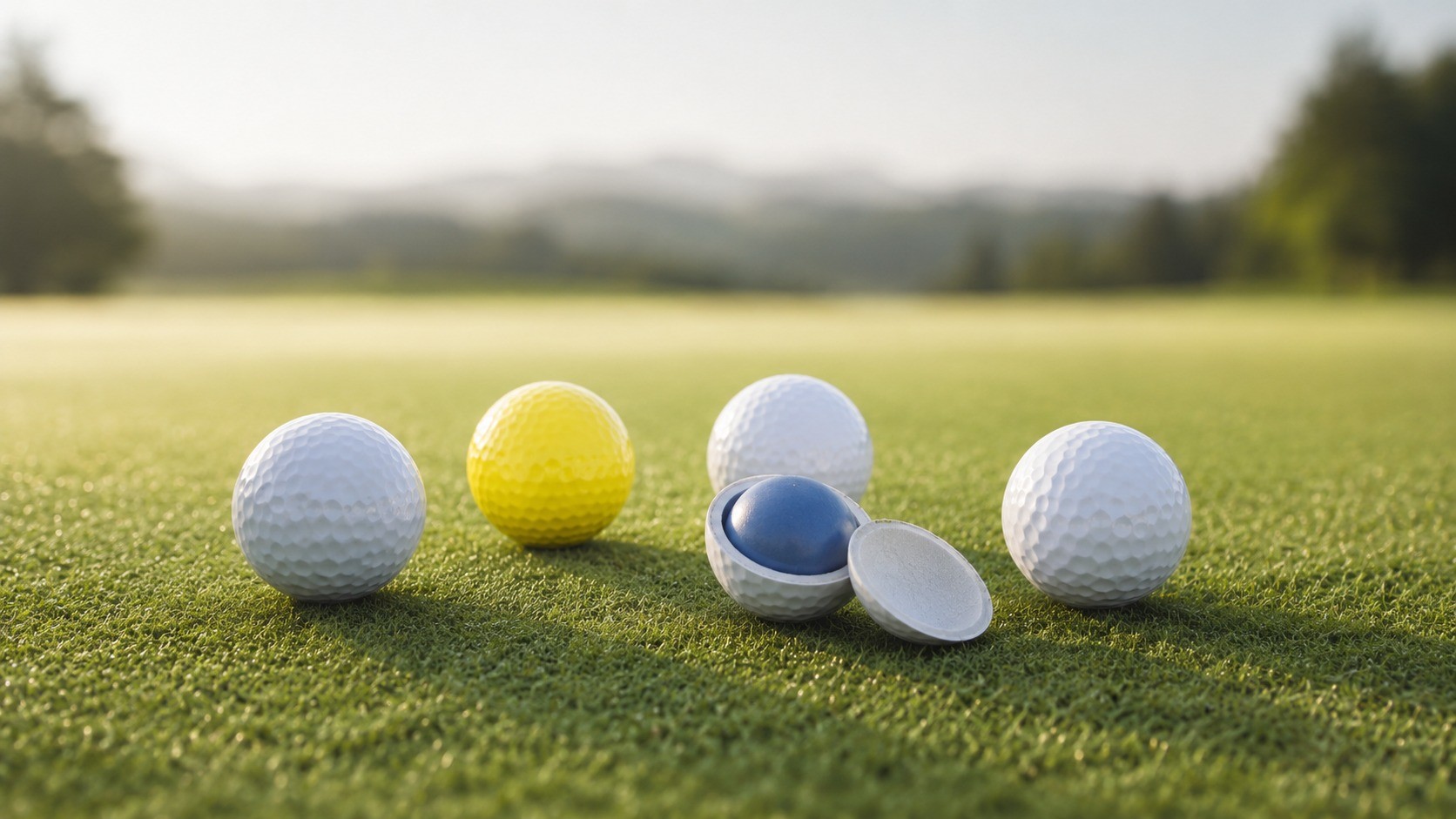
Golf ball compression describes, in simple terms, how much the ball deforms at impact. Players with lower swing speeds often benefit from softer models because they can activate the ball more easily. Players with higher swing speeds often need firmer models so the ball remains stable and launches with control.
Do not choose only by a number on the box. Test the result: does the ball fly steadily with the driver, do your irons reach predictable distances and do you like the feel when putting? When the answer to all three questions is yes, the ball is probably a good fit.
Golf ball spin helps the ball stop on the green, but too much spin can also make problems worse. A player who fights a slice may see even more curve with a very spin-friendly ball. A player who hits more greens and wants chips to check quickly can benefit from extra greenside spin.
The best strategy is to prioritize stability from the tee and choose as much short-game control as your game can actually use. That is usually smarter than going straight to the most expensive model.
- Do not play a different model every round if you want consistent feedback.
- Do not buy only by brand, because every model has different performance traits.
- Do not move into premium balls too early if you still lose many balls.
- Do not focus only on distance. Control with irons, wedges and the putter decides the score.
- Do not forget visibility. Yellow or colored balls can be easier to follow in poor light.
- Define your goal: more distance, less dispersion, more control or better feel.
- Estimate your swing speed roughly: slow, moderate or fast.
- Consider your handicap and how many balls you lose per round.
- Choose two models first and test them over several rounds.
- Then stay with one model as long as your results become more stable.
The right golf ball does not need to be the most expensive one. It needs to fit your speed, ball flight, short game and budget. Beginners usually benefit from forgiving, durable and fairly priced models. Better players should test whether a ball with more greenside spin actually saves shots.
At Digitalgolf.com, you can find golf balls for different playing levels, from solid all-round models to premium balls for maximum control. The best starting point is simple: choose deliberately, test consistently and avoid switching balls every round.
Which golf balls are best for beginners?
For beginners, durable and fairly priced 2-piece or soft distance balls are usually ideal. They provide distance, durability and lower cost when balls are lost.
Is a tour ball worth it for recreational golfers?
Yes, if the player strikes the ball consistently and can use the extra control around the green. When ball loss is high, an all-round ball is often more sensible.
Are soft golf balls always better?
No. Soft balls feel pleasant, but they do not automatically fit every swing. Flight, control and consistent distances are more important.
How many golf ball models should I test?
Two or three models are usually enough. Test them over several rounds rather than only on the driving range, because real course situations are more meaningful.