

Fairway wood or hybrid? Many golfers ask this question when long irons become difficult or when the driver is not always the best choice. Both clubs can make long shots easier, but they solve different problems. The fairway wood offers length and a flatter, penetrating flight. The hybrid is more versatile, easier from the rough and often more consistent for amateurs.
The right club is not decided by what professionals use. It depends on the shots you really need on the course: safer tee shots on tight holes, long approach shots on par 5s, recovery from rough or a replacement for difficult long irons.
Criterion |
Hybrid |
|
Distance |
Usually longer on clean contact |
Slightly shorter, but often more consistent. |
Launch |
Needs a little more speed and clean contact |
Launches more easily and higher. |
From the rough |
Harder because of the larger head |
Better because of the more compact shape. |
From the tee |
Strong alternative to the driver |
Controlled option on narrow holes. |
For beginners |
Good with higher loft, but not always easy |
Often easier than long irons and fairway woods. |
Typical job |
Maximum distance from fairway or tee |
Rescue shots, consistency and long approaches. |
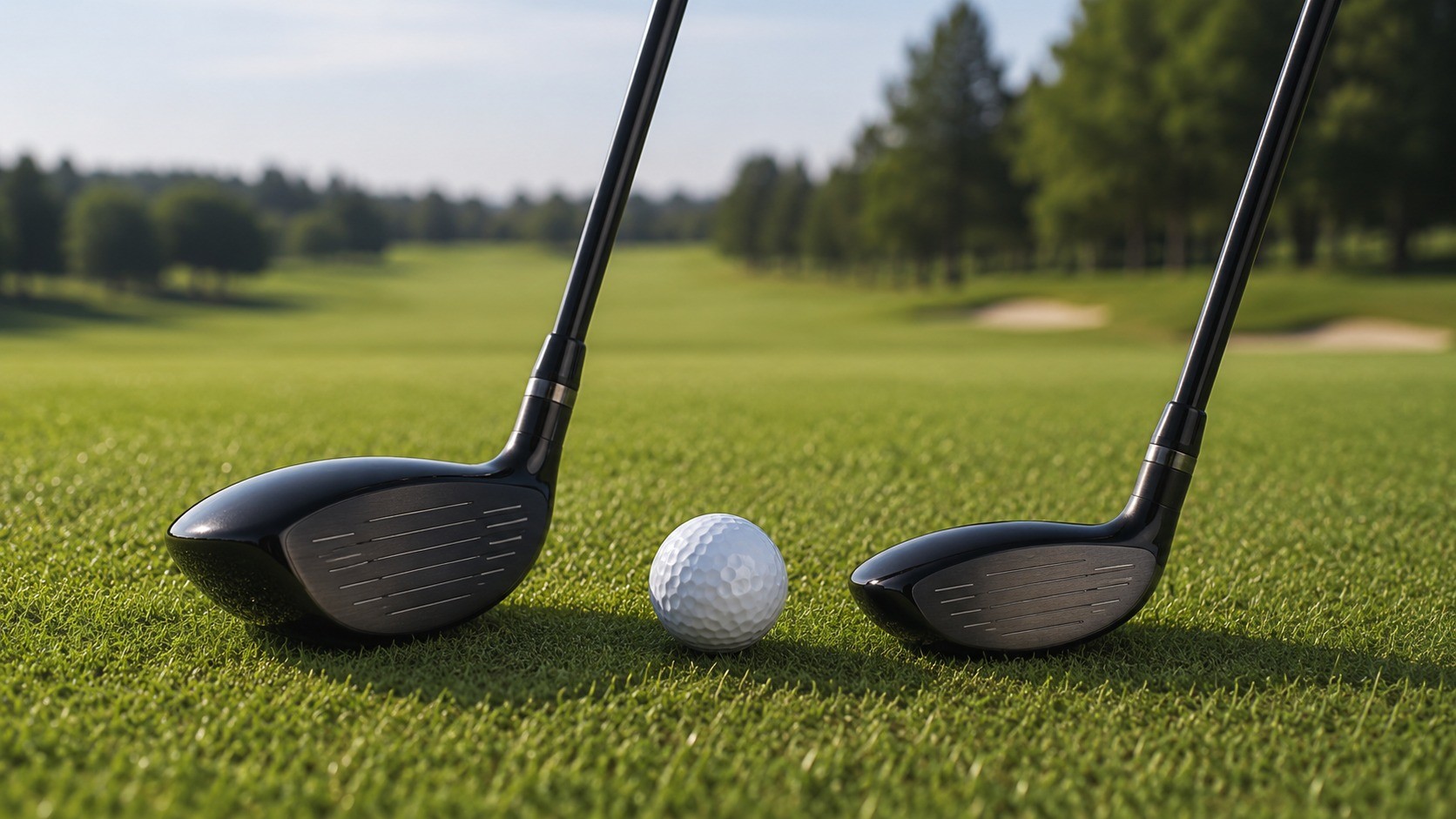
A fairway wood is built for long shots from the fairway or tee. It has a larger head than a hybrid, but more loft than a driver. The classic 3-wood can fly very far, but many amateurs find it difficult to hit from the ground. A 5-wood or 7-wood often launches more easily and is the more practical choice for many players.
Fairway woods are especially useful when you want to reach a par 5 in two, need a long second shot on a par 4 or want a more controlled option than driver from the tee. The key point is launch. If the ball stays too low, theoretical distance is not very useful.
A hybrid combines characteristics of a wood and an iron. The head is more compact than a fairway wood, but more forgiving than a long iron. That is why hybrids are commonly used to replace long irons such as a 3, 4 or 5 iron. They help launch the ball higher, especially from more difficult lies.
A golf hybrid is ideal if you struggle with long irons, need more security from rough or want a long approach club that inspires confidence. Many players produce better average results with a hybrid than with a long iron, even if the perfect iron shot looks attractive in theory.

- You want maximum distance from the tee or fairway.
- You strike the ball cleanly from the ground on a regular basis.
- You often play par-5 holes where a long second shot matters.
- You want a controlled alternative to the driver.
- You prefer a flatter and more penetrating ball flight.
- You have difficulty with long irons.
- You need help from rough or uneven lies.
- You want to launch the ball higher more easily.
- You prefer consistency over maximum single-shot length.
- You want to play tight holes more strategically.
A common mistake is buying a fairway wood and a hybrid that end up flying almost the same distance. That does not improve the setup; it creates confusion. Look for clear distance gaps. If your 5-wood and 4-hybrid travel the same distance, you probably do not need both, or you should adjust loft and shaft choices.
A sensible structure might be driver, 5-wood, hybrid, then irons. Depending on skill level, a 7-wood instead of a hybrid or an additional hybrid instead of a long iron may be better. The name of the club matters less than the distance and the job it performs.
The 3-wood sounds attractive because it is long. In reality, it is demanding from the ground. Low loft, a longer shaft and a flatter launch make it difficult. Many amateurs strike a 5-wood or 7-wood more consistently and achieve better average results. More loft can therefore mean more usable distance.
- Which distance gap do you want to fill?
- Will you use the club mainly from the tee, fairway or rough?
- Does the ball launch high enough to create carry distance?
- Is the dispersion acceptable, or do you collect penalty shots?
- Does the club fit the next clubs in the bag?
- Do you feel comfortable when looking down at the club?
Handicap or level |
Likely tendency |
Why |
Beginner |
Hybrid or higher-lofted fairway wood |
Easier launch and more forgiveness. |
High to mid handicap |
5-wood plus hybrid |
A strong mix of length and versatility. |
Improving player |
3-wood or 5-wood plus targeted hybrid |
Precise distance gapping and more shot options. |
Ambitious player |
Setup based on ball flight and course strategy |
Fine-tuning by carry, spin and use case. |
Fairway woods and hybrids are not opponents. They are tools for different jobs. The fairway wood brings length and can be a strong option from the tee or fairway. The hybrid brings versatility, high launch and more security from difficult lies. Many golfers benefit from a combination of both.
At Digitalgolf.com, you can compare fairway woods and hybrids by purpose. Do not look only at loft and brand. Ask which club solves a real problem on the course. That club deserves a place in the bag.
Is a hybrid easier to hit than a fairway wood?
For many amateurs, yes, especially from rough or difficult lies. A fairway wood can be longer, but it needs cleaner contact.
Should I buy a 3-wood?
Only if you can launch it high and strike it cleanly. Many players get better average results with a 5-wood or 7-wood.
Which iron does a hybrid replace?
Hybrids often replace long irons such as 3, 4 or 5 iron. The actual distance matters more than the number on the club.
Can you hit a hybrid from the tee?
Yes. A hybrid is a strong controlled alternative on tight holes when the driver is too risky.